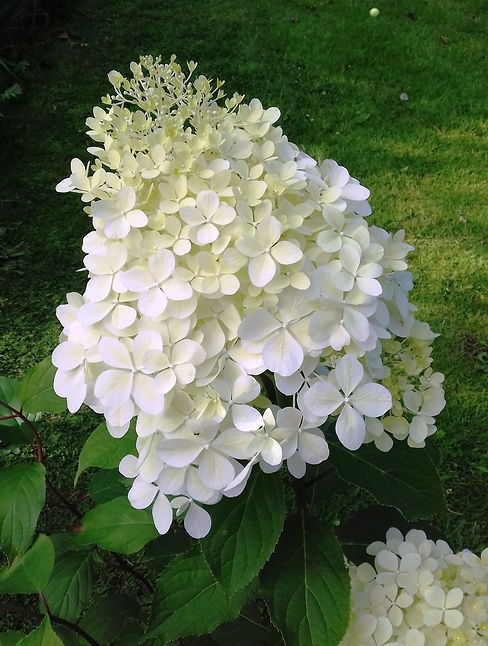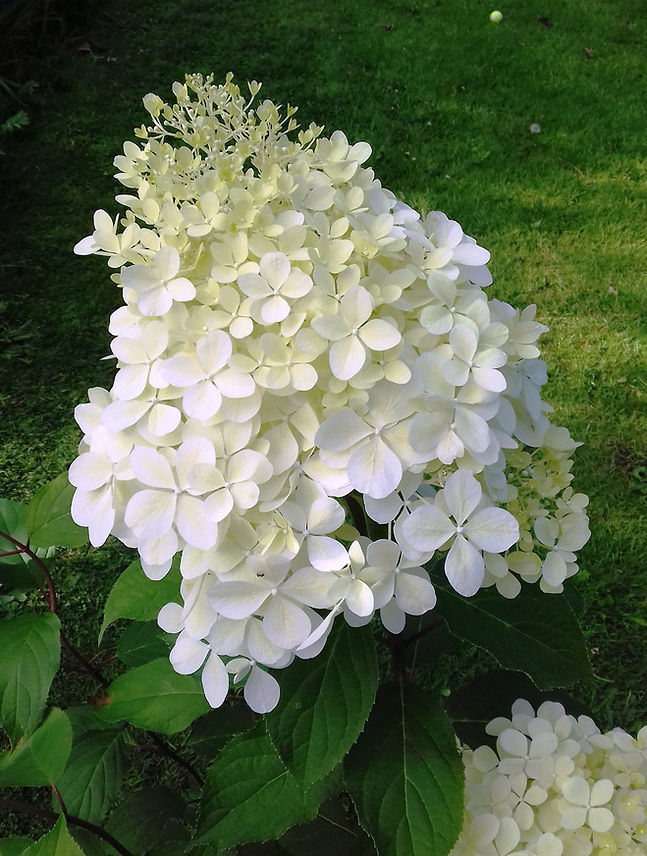
Hydrangea paniculata
Background
Native to forest edges, sparse mountain thickets and valleys in Japan, Eastern China and Taiwan, Hydrangea paniculata was first brought to Europe in the 1861 by Philipp Franz von Siebold. The earliest widely grown European variety was H. paniculata 'Grandiflora'.
Huge increase in popularity since the late twentieth century beginning with H. paniculata "Limelight" (bred by Pieter Zwijnenburg), and now the most widely planted, geographically, around the world due to its hardiness and ease of cultivation
Cultivation
-
Position & Soil: Exceptionally hardy and far more sun-tolerant than macrophylla. Prefers full sun to partial shade in any moist, well-drained soil
-
Pruning: Hydrangea paniculata flowers on new growth so stems can be pruned in early spring (Feb/Mar). Cutting hard back down to say1–3 pairs of buds will encourage vigorous shoots and huge flower panicles. However when wet, these blooms will be weighed down and their stems are often unable to support them. Lighter pruning will result in smaller flowers but sturdier stems. Timing of pruning affects flowering. Carried out in late March /April and flowering will be delayed by several weeks.
-
Colour Note: Soil pH does not alter bloom colour; white/lime tones naturally shift to pink/red as blooms age
-
Propagation Easily propagated from softwood cuttings taken in late spring or hardwood cuttings taken during winter dormancy.