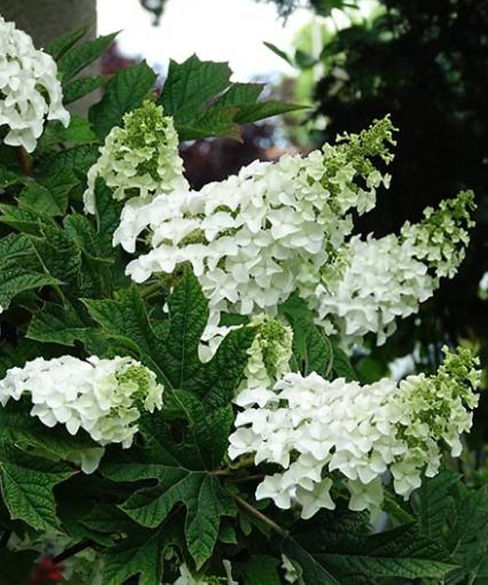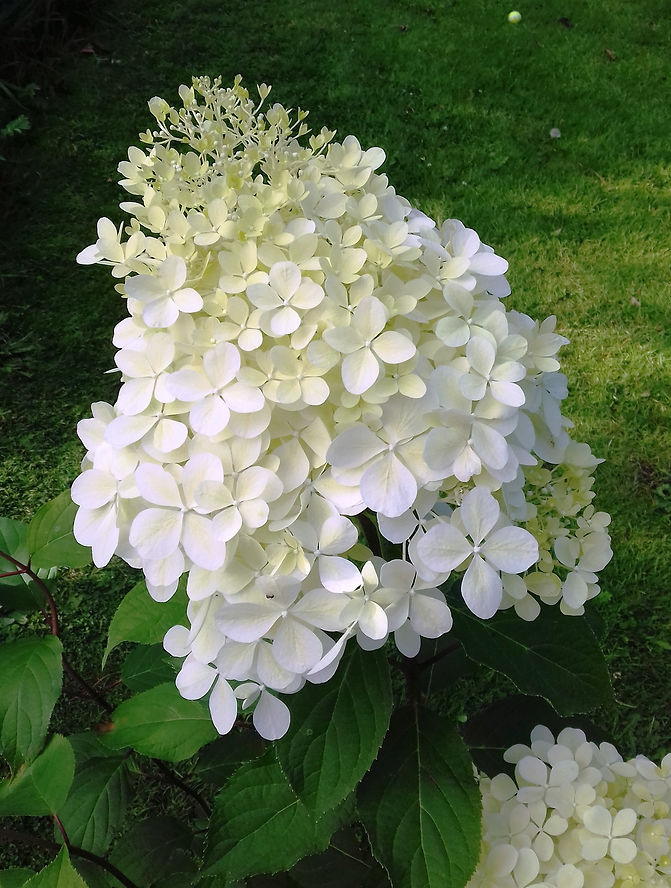
Hydrangea quercifolia
Background
Native to the southeastern United States, primarily growing along moist woodland slopes, ravines, and riverbanks in states like Alabama, Georgia, Florida, and Mississippi
First documented by American botanist William Bartram in the 1770s and officially introduced to Britain in 1803 by John Fraser.
Primary breeding has taken place in the US, most notably by Dr. Sandra Reed who bred popular compact varieties such as 'Ruby Slippers' and 'Munchkin'). Dr. Michael Dirr (University of Georgia) also played a huge role, selecting strong-performing cultivars like 'Alice'.
Cultivation
-
Position & Soil: Prefers partial shade to sun. Unlike most Asian hydrangeas, H. quercifolia is notably more drought-tolerant once established and copes better with sun (full sun brings out its rich orange, red, and deep purple autumn foliage). Requires rich, well-drained soil; it strictly dislikes waterlogged ground
-
Pruning: Hydrangea quercifolia flowers on old/previous year's wood. Requires minimal pruning. Only trim immediately after flowering in late summer to remove spent blooms or shape the plant; spring pruning will remove next season's flower buds
-
Colour Note: Flower colour is unaffected by soil pH. Panicles emerge crisp white, maturing to pink, ruby-red, and brown over the season regardless of soil acidity or aluminium levels
-
Propagation: Propagated primarily through softwood to semi-ripe stem cuttings taken in early-to-mid summer. Because stems can be pithy, cuttings benefit from high humidity and bottom heat. It can also be propagated by layering low-hanging branches in late spring or taking root cuttings in winter.