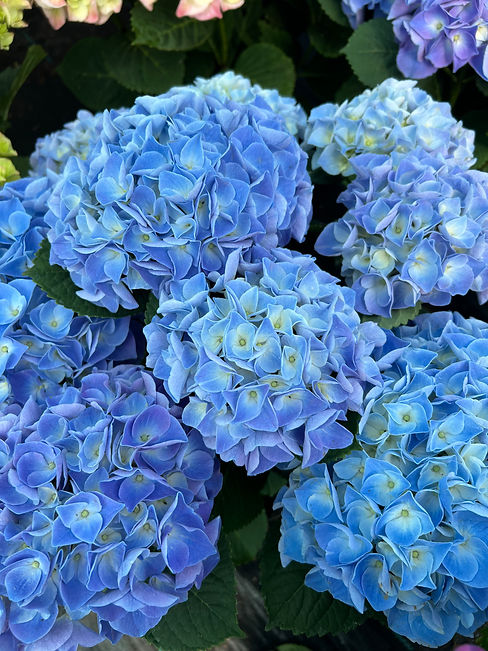
Hydrangea macrophylla
Mophead and Lacecap types
Background
Native to coastal regions of Japan, Hydrangea macrophylla was first brought to Europe in the late 18th century (introduced to Kew by Sir Joseph Banks around 1789). Early imported varieties were primarily lacecap types, but western breeding quickly prioritized rounded mopheads. Historic early cultivars include 'Otaksa' and 'Mariesii'.
Cultivation
-
Position & Soil: Thrives in partial shade protected from harsh afternoon sun, in rich, moisture-retentive, well-drained soil
-
Pruning: Hydrangea macrophylla flowers on old wood so just prune lightly by deadheading in spring down to the first pair of strong, plump buds. Avoid heavy spring cutting or next season’s flowers will be lost.
-
Achieving Blue Flowers: Flower colour is dictated by soil pH and active aluminium availability. Acidic soil (ph<5.5) releases aluminium, turning flowers blue; neutral to alkaline soils result in pink. If soil is naturally alkaline, grow plants in ericaceous compost in containers and drench regularly with aluminium sulphate ("blueing powder"), using rainwater instead of hard tap water.
-
Propagation Easy to propagate via softwood cuttings taken in late spring or semi-ripe cuttings in late summer.